Apothecaries
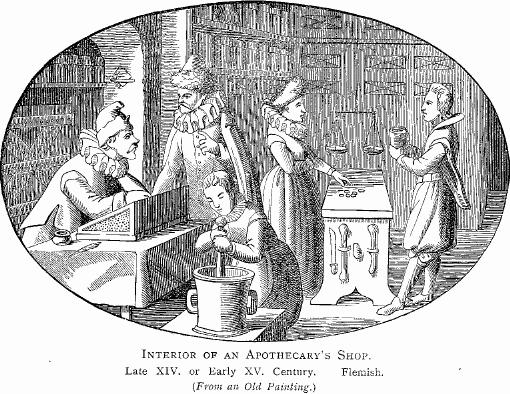
We can consider the figure of an apothecary as the prototype of a pharmacist. He
had a deep knowledge of Materia
medica ( knowledge of therapeutic effects of a substance). An apothecarie's
shop can be roughtly divided into two parts: the front and the back. The front
one was the real shop were he could sell his products, instead, the back was
used to prepare the medicines and herbs. Some medicines were almost always ready
and anyone, able to buy them, can buy them at need, but as in modern pharmacies,
some of them couldn't be stored for long times and so they were made only on
request. During the Middle-Ages an apothecary was the only hope to get a cure
for a illness. They were not officially recognised until the foundation of the
Society of Apothecaries in England in 1606. In the first part of medieval period
they were called spicers or pepperers, because their first occupation was
importing, weighing and selling spices and herbs for use in medicine, then they
started to have their own garden with lots of plants as raw material for their
preparations. They were accused very often of practising magic or witchcraft,
but they used to see various illnesses everyday and from that they had a huge
knowledge of human body and herbs. "The
Church also established a network of cathedral schools and universities where
medicine was studied"
Look at http://www.ncbi.nlm.nih.gov/pmc/articles/PMC1034585/ for
a complete list of "elements" known by apothecaries at the end of Middle Ages.
A
list of herbs translated in English
One of the most important things linked directly with technology is their standard measurement system for small quantities, also known as "Apothecaries' system" (More infos onhttp://en.wikipedia.org/wiki/Apothecaries%27_system).
A table of apothecaries' measurement system


Nessun commento:
Posta un commento